


Your First Helicopter Tour in Salt Lake City: What to Expect, What to Wear, and How to Get the Best Photos
Most people book their first helicopter tour with one quiet question in the back of their mind: what is it actually going to feel like?
The short answer: calmer, smoother, and far more beautiful than you expect. The longer answer is below. We fly every tour from our hangar at Skypark Airport in Woods Cross, about 15 minutes north of downtown Salt Lake City, and this is everything we tell first-time flyers before they climb aboard.
Quick answers for first-time flyers
| QUESTION | ANSWER |
|---|---|
| How long is the flight? | 30 minutes for single-destination tours, 1 hour for the Catch All Tour |
| How many people per flight? | Up to 3 passengers, with a minimum of 2 per booking |
| Is there a weight limit? | 250 lbs per seat |
| Where do we take off? | Skypark Airport, 1129 Redwood Rd, Woods Cross, UT 84087 |
| Can I bring a camera? | Yes, all cameras are welcome |
| What if plans change? | Cancel or reschedule up to 12 hours before your tour |
01 Pick the route that fits your group
Every flight shows you northern Utah from above, but each route has its own personality.
Downtown Salt Lake City Tour
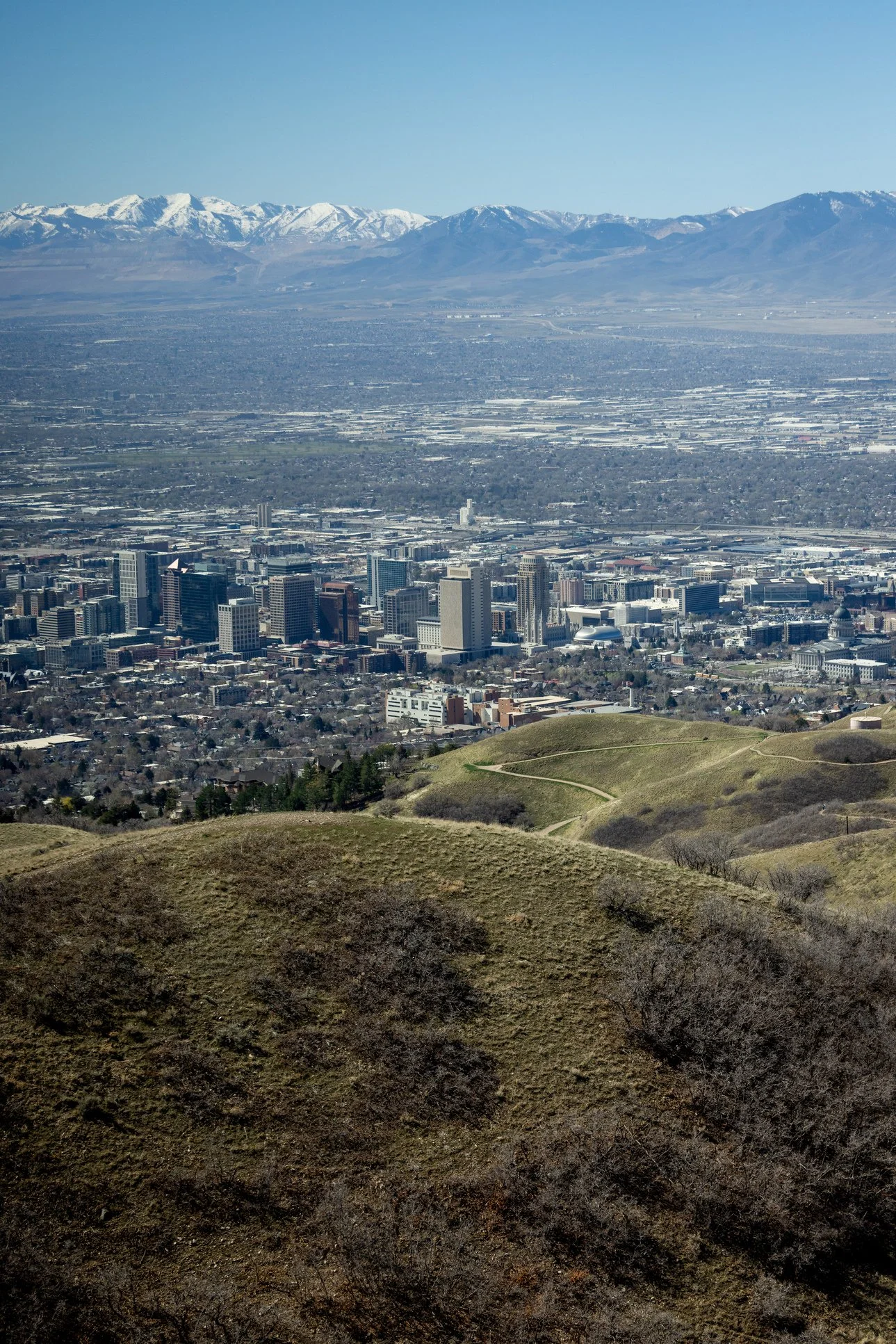
Best for visitors seeing the city for the first time and locals who want to see their hometown from a new angle. You will take in Temple Square, the Utah State Capitol, and the city grid set against the Wasatch Mountains.
Wasatch Peaks Tour
Best for hikers, skiers, and anyone who has stared at those peaks from the freeway and wondered what is up there. Expect rugged ridgelines and deep canyons up close.
Antelope Island Tour
Best for nature lovers and photographers. The Great Salt Lake, the island's golden grasslands, and a shoreline that changes color with the light. (We wrote a full guide to what you will see over Antelope Island and the Great Salt Lake.)
Catch All Tour
Best for bucket-list flights, milestone celebrations, and anyone who cannot choose. Downtown, the mountains, Antelope Island, and the lake in one flight.
02 Book with the details that matter
A few things are worth knowing before you click book.
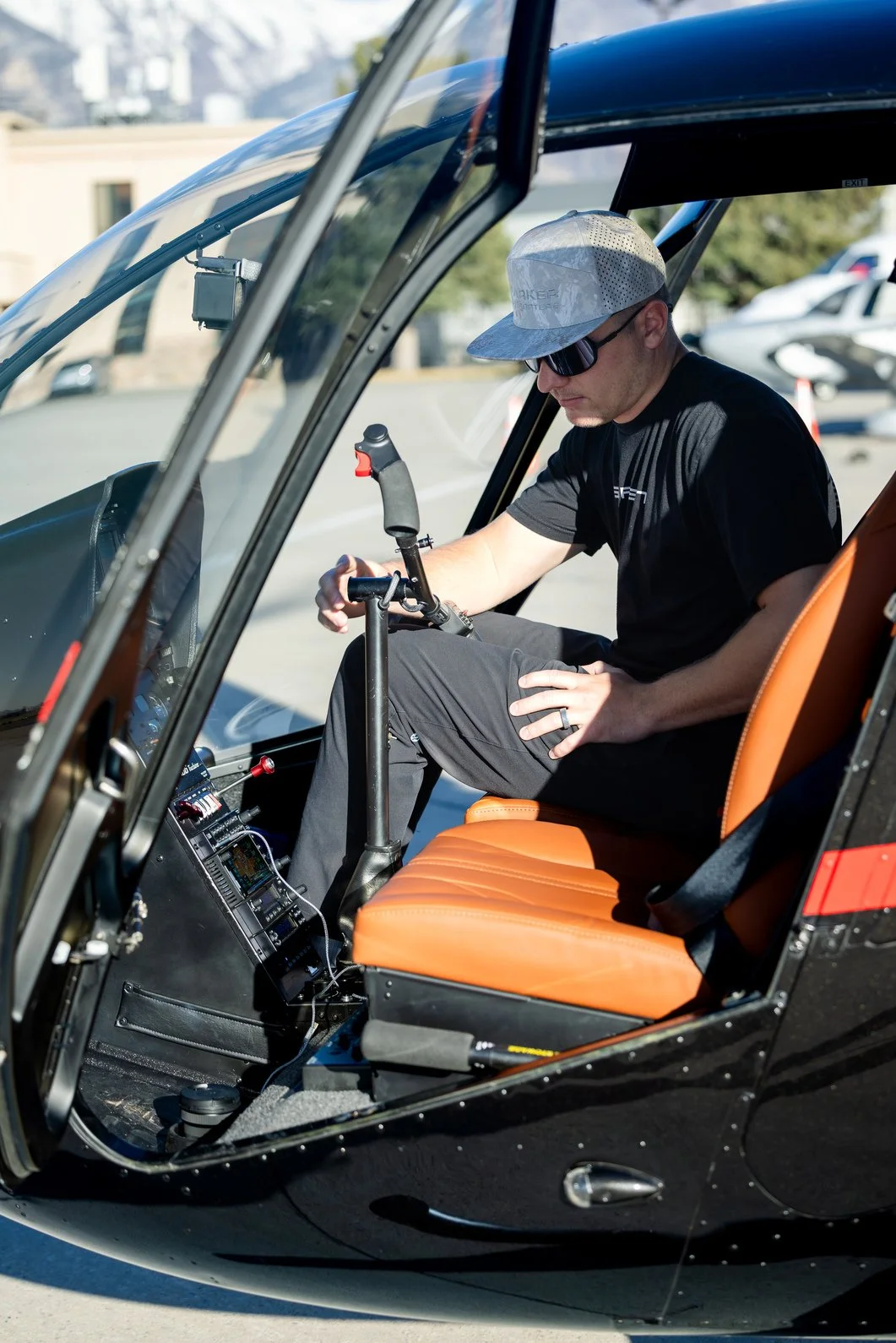
- It is a small, personal cabin. Our 2018 Robinson R66 seats 3 passengers plus your pilot, and every seat has a window view. Bookings need a minimum of 2 people, which makes it ideal for couples, friends, and small families.
- Weight is about balance, not judgment. We ask for accurate weights because your pilot uses them to balance the aircraft and plan the flight. At the Salt Lake Valley's elevation (well over 4,000 feet), those numbers matter even more. The limit is 250 lbs per seat.
- Think about the time of day. In summer, the air is usually calmest in the morning, before the afternoon heat builds. Morning light is also softer for photos.
03 What to wear on a helicopter tour
What you wear makes a real difference to your comfort and your photos.
- Dark, solid-colored tops. Bright or white clothing reflects in the windows and shows up as a ghostly smear in your pictures. Black, navy, and charcoal are a photographer's friend.
- Layers you can adjust. Utah mornings can be cool even in summer, and a light jacket you can unzip keeps you comfortable the whole flight.
- Closed-toe, comfortable shoes. You will walk across the airfield ramp to board.
- Nothing loose on your head. Hats, scarves, and loose items can be caught by the rotor wash while boarding. Tuck them away until you are seated.
- A note on sunglasses. Polarized lenses can make some aircraft windows look streaky or rainbow-tinted. If you notice it, slide them off while you look out.
04 Arriving at Skypark Airport
Plan to arrive [15 minutes] before your scheduled time so there is no rush. Skypark is an easy drive up I-15, about 15 minutes north of downtown.
The hangar is part of the experience. You will find a WWII-themed mural, aviation details everywhere you look, refreshments, and a front-row view of the airfield while you wait. It is a good moment to put your phone on airplane mode, clear your camera roll, and make sure your battery is charged.
05 The safety briefing
Before every flight, your pilot walks you through the essentials: how to approach and leave the helicopter, how your seatbelt and door work, and where to keep loose items. The golden rule is simple. Never walk toward the helicopter until your pilot signals you to, and always approach where your pilot can see you.
The briefing takes a few minutes, and it is the best time to ask anything you are curious or nervous about.
06 Takeoff and the flight itself
This is the part people wonder about most. There is no runway sprint and no pressed-into-your-seat acceleration like on an airliner. The helicopter lifts gently, settles into a short hover, then tilts forward and climbs. Within a minute, the valley opens up beneath you.
The R66 is a turbine helicopter, and turbine engines run with less vibration than the piston engines found in many smaller tour helicopters. In practice, that means a smoother ride and steadier photos.
Your pilot is also your guide. Ask about the landmarks below, the peaks on the horizon, or the best side to look out of next. Every flight is just your group and your pilot, so the conversation is yours.
If You Are Nervous About Flying
Feeling a little anxious before a first flight is completely normal, and it usually fades within the first few minutes in the air. A few things help:
- Eat a light meal beforehand rather than flying hungry or very full.
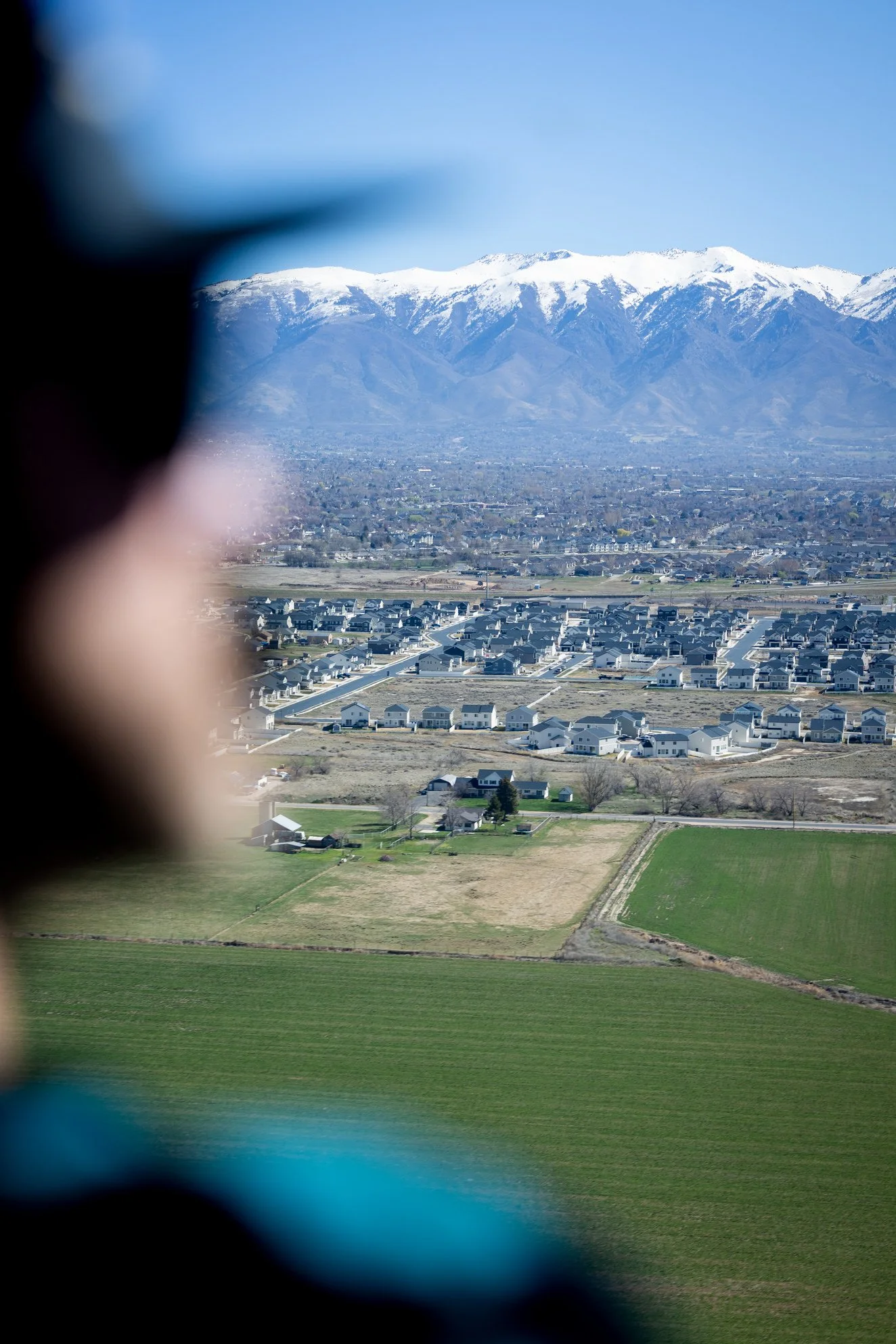
- If you feel queasy, look out toward the horizon instead of straight down.
- Tell your pilot. They fly these routes regularly and can adjust to help you feel comfortable.
- Focus on one thing at a time: a landmark, a peak, the edge of the lake. It turns nerves into curiosity fast.
How To Take Great Photos From A Helicopter
You will want to remember this, so here is how to come home with photos worth framing.
-
Wipe your phone lens before takeoff. Fingerprints blur everything.
-
Turn off the flash. It only bounces off the window.
-
Hold the lens close to the window without touching it. Contact transfers vibration into your shot.
-
Use burst mode or shoot video. Scenes move quickly from the air, and you can pull the best stills later.
-
Set exposure on the landscape, not the sky. Tap the ground on your screen so snow, water, and glare do not wash the picture out.
-
Shoot slightly ahead of the subject. By the time you frame a landmark, you have often passed it.
-
Put the camera down for a few minutes. The view you remember best is often the one you simply watched.
The best time of year for a helicopter tour in Utah
There is no bad season, just different views.
Spring
March to MaySnow still caps the Wasatch while the valley turns green. Some of the most striking contrast of the year.
Summer
June to AugustLong days and settled weather. Book morning flights for the smoothest air and softest light.
Fall
September to OctoberThe canyons turn gold, orange, and red as the aspens and maples change, usually peaking at higher elevations from late September into early October.
Winter
November to FebruarySnow-covered peaks and crisp clear days after a storm passes. Winter inversions can trap haze in the valley, so if visibility is poor, we may suggest a different time.
What happens if the weather changes
Utah weather can shift quickly, especially around the mountains. Your pilot checks wind, cloud, and visibility before every flight and will only fly when conditions are right. You can cancel or reschedule up to 12 hours before your tour, and if we need to postpone for weather, [we will work with you to find a new time].
Frequently asked questions
-
Most first-time flyers are surprised by how smooth and steady it feels. The takeoff is gentle, and once you are at altitude, the view takes over.
-
Our 30-minute tours are [$450] per person and the 1-hour Catch All Tour is [$595] per person. See all tours and current prices.
-
Yes. All cameras are welcome. Just keep straps secure and loose items tucked away during boarding.
-
Children 3 years older
-
About 15 minutes north, at Skypark Airport in Woods Cross.